
Finding out your home has a cracked foundation, sinking slab, or shifting walls is unsettling, especially if you’re already thinking about selling.
It’s natural to wonder whether you can sell a house with foundation issues notwithstanding, or whether the problem effectively takes your home off the market until it’s fixed.
The good news is that homes with foundation or structural issues get sold every day. The path looks different than a typical sale, and understanding your options early can save you stress, money, and wasted time.
Why Foundation Issues Scare Off Traditional Buyers
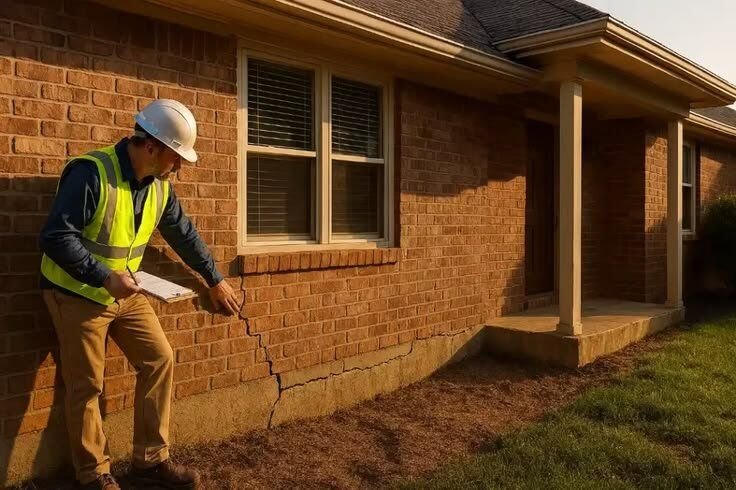
Foundation problems carry a certain weight in a buyer’s mind that goes beyond the actual repair cost. Cracks in walls, sticking doors, uneven floors, or gaps around window frames signal a structural issue, and structural issues signal risk.
Even buyers who love everything else about a house often hesitate when an inspection reveals foundation concerns, because they’re not just worried about the fix itself; they’re worried about what else it might be hiding.
Beyond buyer hesitation, most conventional mortgage lenders are cautious about financing homes with known structural damage.
An appraiser or underwriter who sees foundation issues in an inspection report may require repairs before closing or decline to fund the loan at the appraised value.
That single factor removes a large share of the buyer pool for anyone relying on traditional financing before negotiations even start.
Do You Have to Disclose Foundation Problems?
In most states, sellers must disclose known material defects, and a foundation or structural issue almost always qualifies.
Trying to hide or paint over cracks instead of disclosing them can expose you to legal liability well after closing, including fraud or misrepresentation lawsuits in some jurisdictions.
Disclosure requirements, forms, and penalties vary significantly by state, so it pays to get it right rather than guess.
Because disclosure laws differ from state to state, and sometimes even by county, verify your local requirements or consult a real estate attorney before listing. What’s expected in one state may not match another, and getting this step wrong can create bigger problems than the foundation issue itself.
Understanding What’s Actually Wrong
Not every crack means a catastrophic problem, and not every foundation issue is equally serious. Before deciding how to move forward, it helps to get a rough sense of what you’re dealing with.
Common Types of Foundation and Structural Issues
#1. Settling cracks: Minor, hairline cracks that many older homes develop over time and that may not affect structural integrity.
#2. Foundation heaving or sinking: Uneven movement often tied to soil conditions, drainage problems, or expansive clay soil that swells and shrinks with moisture.
#3. Bowing or leaning walls: Often a sign of soil or water pressure against a foundation wall, which can worsen without intervention.
#4. Structural framing issues: Problems beyond the foundation itself, such as sagging beams or compromised load-bearing elements.
A licensed structural engineer, not just a general home inspector, is typically the right professional to assess severity and give you a realistic sense of what repairs would involve. That assessment becomes useful information no matter which path you choose next.
Your Main Options if you want to Sell a House With Foundation Issues
Option 1: Repair Before Listing
Fixing the foundation before you list can open up the traditional buyer pool and may result in a higher sale price.
But foundation repairs can be expensive, and costs vary widely by damage type, home size, and local labor rates, from a few thousand dollars for minor crack repair to tens of thousands for major underpinning or wall-stabilization work.
Repairs can also take weeks or months, and there’s no guarantee the fix fully resolves buyer concerns once it appears in the home’s disclosure history.
Option 2: List As-Is on the Open Market
You can list the home as-is and disclose the issue upfront, letting the market set the price. This can work, but expect fewer interested buyers, more price negotiation, and a longer time on the market.
Many conventional buyers will still walk away once their lender or inspector flags the issue, even after they accept an offer, which can mean starting the process over.
Option 3: Sell Directly for Cash, As-Is
Selling to a cash buyer who purchases homes as-is removes several of the biggest obstacles: no financing contingency to worry about, no requirement to complete repairs before closing, and typically a much faster timeline.
This route generally means accepting a lower price than a fully repaired home would fetch on the open market, but it also means skipping repair costs, inspection back-and-forth, and the uncertainty of whether a financed buyer will ultimately qualify.
For homeowners who are short on time, cash, or patience for a drawn-out sale, this trade-off is often worth it.
Weighing Repair Cost Against Sale Price
There’s no universal right answer here it depends on your numbers, your timeline, and your tolerance for risk. A useful exercise is to compare the estimated repair cost plus the time and carrying costs of waiting against the price difference between a repaired home and an as-is sale.
For some homeowners, spending on repairs makes sense. For others, especially those dealing with an inherited house, can’t afford to maintain it, or need to sell quickly for financial or personal reasons, selling as-is is the more practical, less stressful choice.
Getting Professional Guidance Before You Decide
Because foundation issues intersect with legal disclosure duties, financing rules, and sometimes tax questions around selling a distressed property, it’s worth talking to a local real estate attorney, a structural engineer, and possibly a tax professional before you commit to a path.
Rules and norms vary by state, so what applies to a friend’s situation in another state may not apply to yours.
A Straightforward Path Forward
If your home has foundation or structural damage and the idea of financing repairs, staging the house, and waiting out a traditional sale feels overwhelming, you do have another option.
At webuyhousesfastusa.com, we buy houses as-is, foundation issues and all, with no repairs required on your end and no financing contingencies to worry about.
Many homeowners find that a straightforward cash offer gives them clarity on what their house is worth right now, with no obligation to move forward.
If you’d like to see what that looks like for your situation, reach out for a free, no-pressure cash offer and take it from there.
