
If you’re getting ready to sell your home, one of the first questions that comes up is who pays closing costs you or the buyer?
The honest answer is: both of you usually pay something, just for different things.
Closing costs are the various fees, taxes, and charges that have to be settled before ownership of a property officially transfers, and while the exact split can vary by deal and by location, there are some patterns that hold true in most home sales across the country.
This guide breaks down what sellers typically pay, what buyers typically pay, and where there’s room to negotiate.
What Are Closing Costs, Exactly?
Closing costs are the collection of fees tied to finalizing a real estate transaction. They cover things like title work, recording fees, prorated taxes, agent commissions, loan-related charges, and various administrative costs that pop up between an accepted offer and the day keys change hands.
Some of these costs are tied to the property itself, some are tied to the buyer’s financing, and some are simply the cost of doing business through a title company or closing attorney.
Because there are so many moving pieces, it’s rarely one lump sum charged to one party. Instead, costs get divided based on custom, contract terms, and sometimes state or local practice.
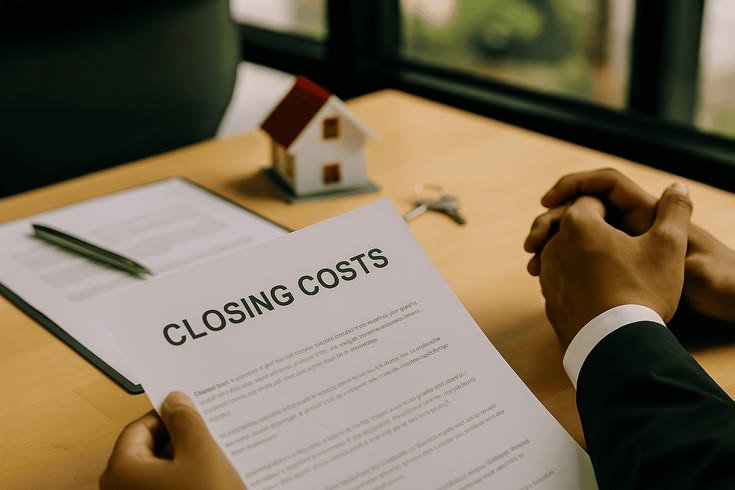
Who Pays Closing Costs When Selling a House?
In most traditional sales, both the buyer and the seller pay their own set of closing costs. Neither side typically pays for everything, and neither side typically pays nothing. As a general rule of thumb:
- Sellers tend to cover costs tied to the property and the sale itself, such as agent commissions, transfer taxes, and any agreed-upon repairs or credits.
- Buyers tend to cover costs tied to financing the purchase, such as loan origination fees, appraisal costs, and lender’s title insurance.
That split isn’t fixed in stone, though. Local custom plays a real role in some markets it’s typical for sellers to cover the owner’s title insurance policy, while in others buyers pay for it.
Contract negotiations can also shift the split, especially in a buyer’s market where sellers may agree to cover more just to get a deal done, or in a seller’s market where buyers may take on more to make their offer stand out.
Typical Seller Closing Costs Explained
When people ask about closing costs for seller responsibility specifically, a few line items tend to show up on nearly every settlement statement:
Real Estate Agent Commissions
This is usually the single largest cost a seller pays, and it’s typically calculated as a percentage of the final sale price.
Commission structures and who pays what have been evolving in recent years, so it’s worth confirming current terms with any agent you work with rather than assuming a fixed percentage.
Transfer Taxes and Recording Fees
Many states and counties charge a tax or fee when a property changes hands. Whether the seller or buyer pays this and how much it is varies significantly depending on where the property is located, so this is an area where you’ll want to check local rules or ask a title company for specifics.
Title-Related Fees
Sellers are often responsible for providing a clear title and may cover part of the title insurance or settlement fee, depending on local custom.
Prorated Property Taxes and HOA Dues
If you’ve already paid property taxes or HOA dues for a period beyond your closing date, you’ll typically receive a credit; if you’re behind, you’ll owe a prorated amount at closing.
Outstanding Liens or Loan Payoffs
Any remaining mortgage balance, home equity loan, or lien against the property generally has to be paid off from sale proceeds at closing.
How Much Are Closing Costs for Sellers?
A common question homeowners ask is how much are closing costs likely to run. There’s no single number that applies everywhere, because it depends on your sale price, your location, your agent’s commission structure, and the specifics of your contract.
As a very general starting point, many sellers find that total closing costs commissions included land somewhere in a range that can span from a few percent of the sale price up to roughly ten percent, with commissions typically making up the largest share of that total.
Because ranges like this vary so much by market and by deal, the most reliable way to know your actual number is to request a seller net sheet or estimated settlement statement from a real estate agent, title company, or closing attorney before you list.
That document will lay out projected costs based on your specific sale price and location.
Can You Negotiate Who Pays Closing Costs?

Yes closing cost allocation is one of the more negotiable parts of a real estate contract. It’s common for buyers to ask sellers for a “seller credit” toward their closing costs, especially if an inspection turns up repair issues, or if the buyer is trying to keep more cash on hand at closing.
Sellers sometimes agree to this in exchange for a smoother sale, a faster closing timeline, or a higher offer price that offsets the credit.
There’s no universal rule for how far this negotiation can go, and practices differ by state and by lender guidelines on how much of a credit a buyer’s loan program will allow.
If you’re navigating this as a seller, it often helps to talk through the trade-offs with a real estate professional or attorney familiar with your local market before agreeing to anything.
Ways to Reduce or Avoid Closing Costs When Selling
If minimizing what you pay at closing is a priority, a few approaches are worth considering:
#1. Shop around for title and settlement services. Fees for title insurance and closing services can vary between providers, and getting more than one quote sometimes reveals meaningful savings.
#2. Ask about commission structures upfront. Understanding exactly what you’re agreeing to pay, and when, avoids surprises later.
#3. Negotiate the contract terms. Who pays which fee is often more flexible than sellers assume, particularly in a slower market.
#4. Sell directly to a cash buyer. Selling as-is to a company that buys homes for cash can simplify or reduce several of the fees tied to a traditional sale, since there’s often no financing contingency, no appraisal requirement, and a much shorter timeline involved.
As with anything involving real estate law, tax treatment, or contract enforcement, specifics vary meaningfully from state to state.
What’s standard practice in one part of the country may be unusual or even against local custom somewhere else.
Before making decisions based on any of the general information above, it’s worth verifying the details for your specific location or checking with a local real estate professional, title company, or attorney.
Get a Cash Offer and Skip the Guesswork
Figuring out who pays closing costs, and how much your share might be, is a lot easier when you’re working with people who walk you through the numbers upfront instead of leaving you to piece it together at the closing table.
At We Buy Houses Fast USA, we make cash offers on homes as-is, nationwide, and we handle the process in a way designed to keep costs simple and transparent for sellers.
If you’d rather skip months of showings, repairs, and uncertainty about fees, reach out for a no-obligation cash offer on your house. We’ll walk you through exactly what to expect so you can decide what makes the most sense for your situation.