
If you’re selling or buying a home through a traditional financed sale, one document deserves your full attention before you ever sign anything: the closing disclosure.
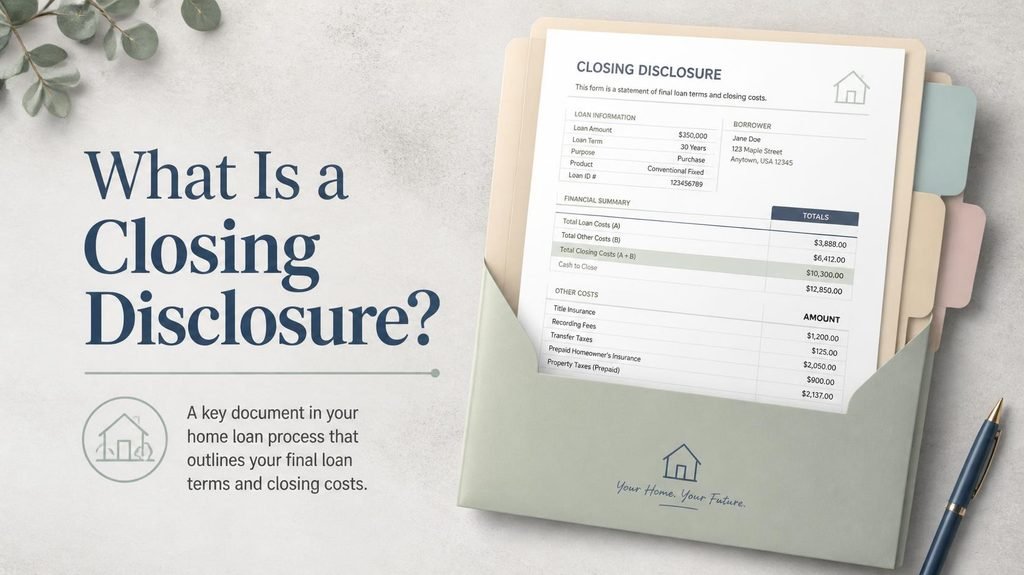
This five-page form spells out the final loan terms, the exact costs involved, and how much money changes hands at closing.
Reviewing it carefully and knowing what to check can help you catch costly errors before they become permanent.
What Is a Closing Disclosure, Exactly?
A closing disclosure is a standardized form lenders must provide to borrowers before a mortgage closing.
It lays out the final loan terms (interest rate, monthly payment, loan amount), the full breakdown of closing costs, and the total cash needed to close the transaction.
It’s meant to mirror the Loan Estimate you received earlier in the process, so you can compare the two and see whether anything changed.
Among the various closing documents you’ll encounter during a real estate transaction, this one is arguably the most important, because it’s your last real opportunity to verify the numbers before they’re locked in.
When Do You Receive the Closing Disclosure?
Federal rules generally require that borrowers receive the closing disclosure at least three business days before the closing date.
That waiting period exists specifically so buyers have time to review the document, ask questions, and flag discrepancies rather than being handed a stack of paperwork at the closing table and asked to sign on the spot.
If the form arrives later than expected, or if key terms change significantly after you receive it, that can sometimes trigger a new three-day review period.
Timelines and specific triggers can vary by lender and the nature of the change, so if you’re ever unsure whether a delay is normal, it’s worth asking your loan officer or closing agent directly.
Does Closing Disclosure Mean Clear to Close?
This is one of the most common questions homeowners ask real estate agents, and it’s an important distinction. Receiving your closing disclosure does not automatically mean you’re “clear to close.”
Clear to close is a separate designation that means the underwriter has fully approved the loan and all conditions have been satisfied.
In many transactions, the closing disclosure goes out once the lender is confident the loan will close, but final clear-to-close status can still depend on a handful of remaining items, like a final employment verification or a last look at your credit.
In practice, the two milestones often land close together, but they’re not the same thing. If you’re waiting to schedule movers, utility transfers, or a final walkthrough, it’s worth confirming with your lender specifically that you’re clear to close, rather than assuming that receiving the closing disclosure alone means every box has been checked.
Key Sections to Check on Your Closing Disclosure
The form is only five pages, but each section carries real financial weight. Here’s what deserves a close look.
Loan Terms
Confirm the loan amount, interest rate, monthly principal and interest payment, and whether there’s a prepayment penalty or a balloon payment. These should match what you agreed to — if the rate or loan type looks different from what you locked in, that’s worth raising immediately.
Projected Payments
This section shows your estimated monthly payment including taxes, insurance, and any mortgage insurance. Make sure the estimated escrow amounts look reasonable based on your local property tax rates and insurance quotes.
Closing Costs and Cash to Close
This is where line-item fees- origination charges, title fees, recording fees, prepaid interest, and more- are itemized.
Add them up and compare the total to what you were originally quoted on your Loan Estimate. Then check the “cash to close” figure, which tells you exactly how much money you’ll need to bring (or, if you’re selling, how much you’ll walk away with after payoff and costs).
Comparison to Your Loan Estimate
Page 3 of the closing disclosure typically includes a direct comparison to your original Loan Estimate. Some fees can change very little or not at all, while others can shift more.
If you see an unusually large jump, ask your lender to explain it in writing before closing day.
Common Errors and Red Flags to Watch For
#1. Misspelled names or incorrect property address– small clerical errors that still need to be fixed before signing.
#2. A different interest rate or loan program than what you locked in.
#3. Unexplained new fees that didn’t appear on your Loan Estimate.
#4. Incorrect payoff amounts for existing loans, liens, or judgments, if you’re selling.
#5. Missing or wrong seller/buyer credits, such as agreed-upon repair credits or concessions.
None of these are necessarily deal-breakers, but each one is worth catching before you’re at the closing table rather than after.
What If You Find a Mistake?
Contact your lender or closing/title agent as soon as you spot a discrepancy — don’t wait until closing day.
Most issues can be corrected with an updated closing disclosure, though depending on the type and size of the change, it may or may not restart the required waiting period.
Because rules and typical practices can vary by state and by lender, if something looks off and you’re not getting a clear answer, it’s reasonable to loop in a real estate attorney or your agent before you sign.
A Faster Path That Skips Some of the Paperwork
Traditional financed sales come with a lot of moving parts; appraisals, underwriting conditions, and a stack of closing documents that both buyer and seller have to review and sign off on.
If you’re a homeowner trying to sell, that timeline and the paperwork it involves aren’t always practical, especially if you’re dealing with a tight schedule, a property that needs repairs, or a situation where certainty matters more than squeezing out the last dollar on the open market.
Selling directly for cash generally involves a much shorter, simpler closing process, with far fewer conditions and a lot less waiting on loan approvals.
Ready to Explore a Cash Offer?
If reading through all of this has you wondering whether there’s a simpler way to sell your house, we buy houses in as-is condition, for cash, with flexible closing timelines and no need to navigate a lender’s underwriting process.
Reach out to webuyhousesfastusa.com for a no-obligation cash offer and see what a faster, more straightforward closing could look like for your situation.