
If you’re getting ready to list your home, you’ve probably already started a mental (or literal) to-do list of repairs.
Before you spend another weekend or another dollar, it’s worth stepping back and asking a different question: what not to fix when selling a house?
Not every repair pays you back, and some projects can actually cost you time and money without moving the needle on your sale price. Here’s how to tell the difference between repairs worth making and the ones you can safely skip.
What Not to Fix When Selling a House
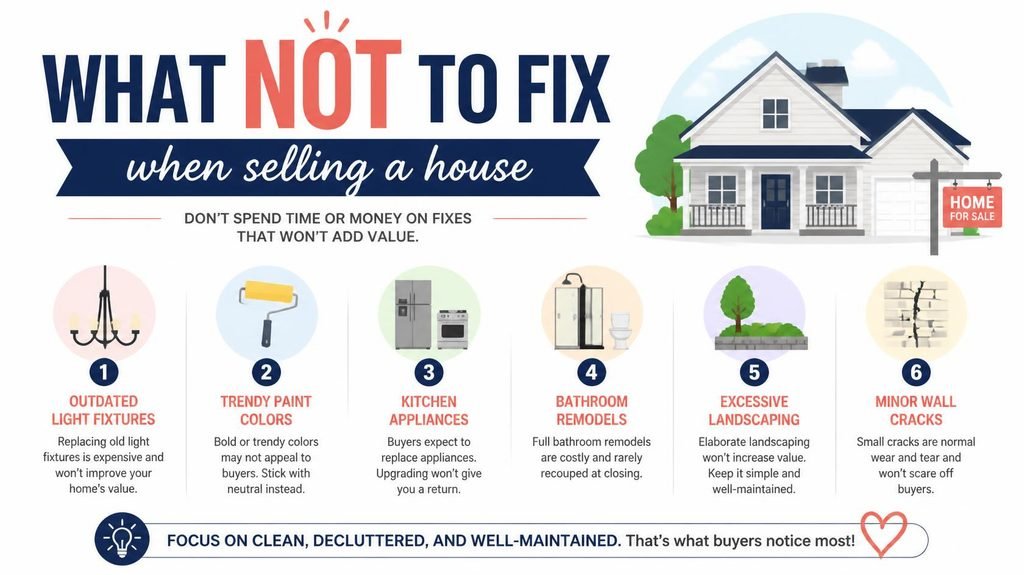
The general rule is simple: skip repairs that are purely cosmetic, highly personal in taste, or unlikely to be noticed (or valued) by the type of buyer you’re likely to attract.
Full remodels almost never return their full cost at resale, and buyers shopping in most price ranges expect a lived-in home, not a showroom. Common examples of things you usually don’t need to fix before selling include:
#1. Outdated but functional kitchens and bathrooms (think dated tile or older cabinet styles, not broken fixtures)
#2. Minor cosmetic wear like scuffed baseboards, small nail holes, or worn (but intact) carpet
#3. Landscaping upgrades beyond basic mowing, trimming, and cleanup
#4. Full room additions or major layout changes meant to “add value”
#5. Old but working appliances that aren’t included in the sale
#6. Mismatched paint colors or wallpaper, unless it’s a strong, unusual color that could turn off a broad range of buyers
These projects tend to reflect your taste more than they reflect the home’s actual condition, and taste is exactly what the next buyer will want to put their own stamp on anyway.
What to Fix Before Selling a House (The Short List)
On the flip side, there’s a shorter list of repairs that are typically worth doing because they affect safety, function, or a buyer’s ability to get financing.
When homeowners ask what to fix before selling a house, this is usually where a good agent or inspector will point them:
#1. Active roof leaks or significant roof damage
#2. Electrical issues that could be a safety hazard (exposed wiring, non-functioning outlets, an outdated panel)
#3. Plumbing leaks, especially anything causing visible water damage
#4. HVAC systems that don’t turn on or heat/cool properly
#5. Structural concerns flagged by a prior inspection, such as foundation cracks
#6. Mold or significant water intrusion
#7. Missing smoke detectors or other basic safety items
These issues can stall or kill a financed sale, since many mortgage lenders require a home to meet certain condition standards before they’ll approve a loan.
If a buyer’s inspector finds one of these problems, it often comes back to you anyway, just later in the process and with less leverage to negotiate.
Cosmetic and Minor Issues You Can Usually Skip
Buyers today are more accustomed to move-in-ready listings on paper, but in practice, most understand a home won’t be flawless, especially an older or mid-range property.
Small imperfections rarely change a buyer’s decision to make an offer. Instead of spending on:
Full interior repaints
A full repaint can be costly and time-consuming. Unless walls are heavily marked, an unusual color, or in poor condition, most buyers factor a future repaint into their own plans anyway.
New flooring throughout
Replacing all the flooring in a home is expensive and highly dependent on personal taste. Worn but functional flooring is typically something buyers will negotiate on or plan to replace themselves, not something that stops a sale.
Minor driveway or walkway cracks
Small, non-structural cracks in concrete are common and usually treated as normal wear rather than a red flag.
Big-Ticket Repairs Worth a Second Look
Even within the “skip it” category, exceptions exist. If a large repair is clearly visible, safety-related, or something every buyer’s inspector will flag anyway, it may be worth addressing, or at least pricing out, before you list.
Examples include a roof nearing the end of its life, a failing water heater, or a sewer line issue. In these cases, get a repair estimate even if you don’t do the work.
That number helps you set realistic expectations for your listing price or for negotiating with a buyer later.
Using Repair Credits Instead of Doing the Work Yourself
One of the most useful tools for handling the “fix it or not” dilemma is the repair credit. Instead of spending your time coordinating contractors, you can offer the buyer a credit at closing that covers the estimated cost of the repair.
Repair credits are common in traditional, financed home sales and can benefit both sides:
#1. You avoid the hassle of finding contractors, scheduling work, and hoping it passes a follow-up inspection
#2. The buyer gets to choose their own contractor and finish level, rather than living with your choice
#3. Negotiations can move faster since you’re negotiating a dollar amount instead of a scope of work
Repair credits typically come up after a home inspection, once specific issues are identified and estimated.
If you’d rather not manage repairs at all, mentioning that you’re open to a repair credit in your listing or during negotiations can head off some back-and-forth before it starts.

When Selling As-Is Makes More Sense Than Renovating
For some homeowners, even the “must-fix” list is more than they want to take on, whether because of cost, time, health, distance from the property, or simply wanting a clean break.
Selling a house as-is means listing it in its current condition and letting the buyer factor any needed work into their offer.
This approach tends to make the most sense when:
#1. The home needs multiple significant repairs at once
#2. You’re relocating on a tight timeline and can’t manage contractor schedules
#3. The property was inherited, and you’re not local or familiar with its condition history
#4. You’d rather have certainty and speed than try to maximize every last dollar through repairs
Keep in mind that disclosure requirements for known defects vary by state, so even in an as-is sale, you’ll typically still need to disclose material issues you know about.
Verify your state’s specific disclosure rules, or check with a local real estate attorney, before you list.
Sell Your House As-Is, Skip the Repair List
Figuring out what not to fix when selling a house comes down to weighing your time, budget, and goals against what a buyer will actually pay for.
If that math doesn’t add up, or if you’d simply rather not deal with repairs, showings, or financing timelines at all, selling directly for cash is another path worth considering.
At webuyhousesfastusa.com, we buy houses in as-is condition, no repairs, no cleanup, and no repair credit negotiations required.
If you’d like to see what a no-obligation cash offer for your home looks like, we’re happy to take a look and walk you through the process.