
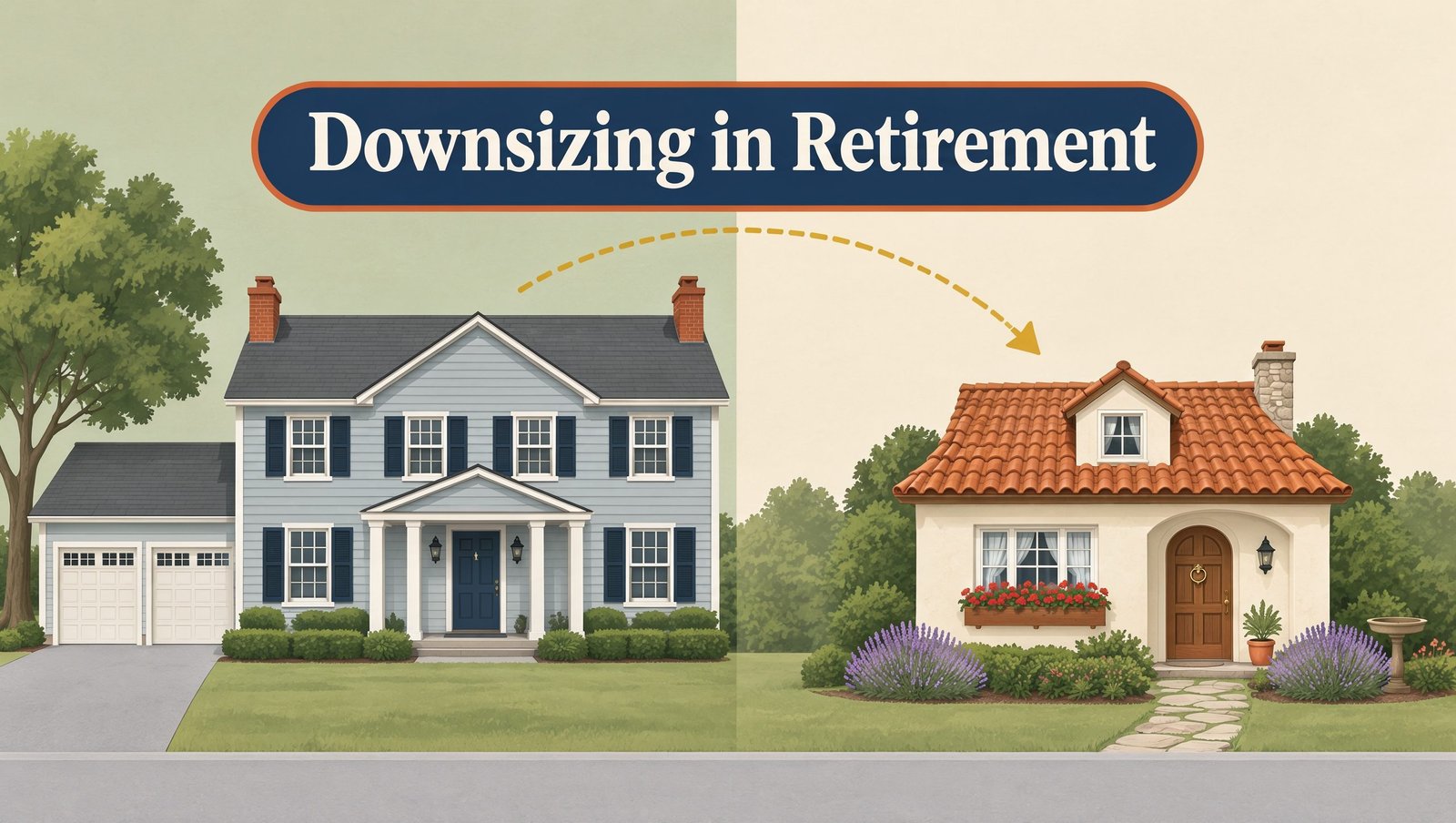
Deciding to sell a house by downsizing in retirement isn’t just a financial decision; it’s an emotional one. Maybe the stairs have gotten harder to manage, the yard has become more work than it’s worth, or the house that once held a busy family now feels too big and too quiet.
Whatever the reason, downsizing in retirement is one of the most common moves older homeowners make, and it doesn’t have to be the stressful, drawn-out process many people expect.
This guide walks through what makes downsizing hard, your options for selling, and how to think through the process so you can move forward with confidence instead of dread.
Why So Many Retirees Choose to Downsize
There isn’t one single reason people downsize. Usually it’s a combination of things. Common motivations include:
#1. A home that’s simply too large for one or two people to maintain
#2. Rising costs of upkeep, utilities, property taxes, or insurance
#3. Physical limitations that make stairs, yard work, or general maintenance difficult
#4. A desire to be closer to adult children, grandchildren, or a specific community
#5. Wanting to free up home equity to support retirement income or healthcare needs
#6. Simply wanting less “stuff” and less responsibility
Whatever the mix of reasons, the underlying goal is usually the same: trade a home that has become a burden for a living situation that feels lighter and more manageable.
Why the Traditional Selling Process Can Add Stress at the Wrong Time
Selling a home the conventional way (hiring an agent, prepping the property, listing it, and waiting for offers) can work well for many sellers.
But for someone downsizing in retirement, that process can introduce exactly the kind of stress they’re trying to avoid.
Repairs and Updates
Homes lived in for decades often need work before they’ll show well: new flooring, paint, roof repairs, updated fixtures, or bigger issues like plumbing or foundation concerns.
Paying for these repairs, coordinating contractors, and living through the disruption can feel overwhelming, especially on a fixed income or with health considerations.
Time and Uncertainty
Even in a strong market, a traditional sale can take weeks or months from listing to closing, and there’s no guarantee when or for how much the home will sell.
That uncertainty can be difficult when you’re trying to plan a move, coordinate timing with a new living situation, or simply want the process behind you.
Showings and Disruption
Keeping a home “show ready” for weeks or months, working around showings, and negotiating with buyers can be draining, particularly if you’re also trying to sort through decades of belongings at the same time.
Understanding Your Options When You Sell a House While Downsizing in Retirement
There’s no single “right” way to sell. The best option depends on your timeline, your home’s condition, and how much involvement you want in the process.
Listing with a Real Estate Agent
A traditional listing can potentially bring the highest sale price, especially if the home is in good condition and located in a desirable area.
In exchange, this route typically involves preparing the home, paying for repairs and staging, covering agent commissions, and managing an open-ended timeline.
Selling As Is for Cash
Selling directly to a cash home buyer lets you skip repairs, showings, and financing contingencies. You typically get an offer based on the home’s current condition, with the option to close on a timeline that works for you, often in a matter of weeks rather than months.
This route generally trades some top-dollar sale price for speed, certainty, and far less hassle, which is often a fair trade for someone who values simplicity over maximizing every last dollar.

What to Do With Decades of Belongings
For many retirees, sorting through a home’s contents is the most emotionally difficult part of downsizing, even more than the sale itself. A few approaches that tend to help:
#1. Start early and go room by room rather than trying to tackle the whole house at once.
#2. Sort into clear categories (keep, give to family, donate, sell, and discard) so decisions don’t have to be revisited repeatedly.
#3. Involve family members in deciding what they want, ideally before the home goes on the market.
#4. Consider a local estate sale company or donation service if the volume of belongings feels unmanageable on your own.
Giving yourself permission to let go of items gradually, rather than all at once, can make the process feel far less overwhelming.
Tax and Financial Considerations to Discuss With a Professional
Selling a home in retirement can have real financial implications, and these vary by state, how long you’ve owned the home, your overall income, and your specific situation.
Some things worth discussing with a tax professional, financial advisor, or elder law attorney before you sell include:
#1. Potential capital gains tax implications, and any exclusions that may apply to a primary residence
#2. How sale proceeds might affect eligibility for certain benefits or programs
#3. State-specific transfer taxes, disclosure requirements, or closing procedures, which can vary significantly from state to state
#4. How the timing of a sale fits into your broader retirement income and estate planning picture
Because tax rules and state laws differ and change over time, verify current requirements with a licensed professional rather than relying on general information (including this article) for specific numbers or thresholds.
Making the Move Easier on Yourself
A few practical steps can make the whole experience feel more manageable:
#1. Get a clear picture of your home’s value and condition before deciding how to sell.
#2. Compare your options (traditional listing versus a direct cash sale) against your actual priorities: price, speed, or simplicity.
#3. Build a realistic timeline that accounts for sorting belongings, the sale itself, and your move to a new home.
#4. Lean on family, friends, or professionals for support instead of trying to manage everything alone.
There’s no need to rush a decision, but having a plan, even a loose one, tends to reduce the anxiety that comes with an open-ended “someday I’ll deal with the house” mindset.

A Simpler Path Forward
Downsizing in retirement is a major life transition, and the way you sell your home shouldn’t add unnecessary stress.
If repairs, showings, and months of uncertainty feel like more than you want to take on, selling your house as-is for cash is worth considering.
At webuyhousesfastusa.com, we buy homes directly from homeowners in as-is condition, nationwide, with no repairs, no showings, and no obligation to accept an offer.
If you’d like to see what a fair, no-pressure cash offer for your home looks like, reach out to get a free, no-obligation offer and talk through your options at your own pace.