
If you’ve typed your address into a free home value estimator tool in the last few minutes, you’re not alone; it’s one of the most common first steps homeowners take when they start wondering what their house is worth.
These tools are fast, free, and satisfying in a way that a real appraisal never is: type an address, get a number in seconds. But how much should you actually trust that number?
The honest answer is: it depends on the tool, your neighborhood, and how recently a comparable home nearby actually sold.
Let’s walk through the most popular options, how they work under the hood, and where their estimates tend to go wrong.
What Is a Free Home Value Estimator, and How Does It Work?
A home value estimator is an automated valuation model, often shortened to AVM. Instead of a human walking through your house and evaluating its condition, an AVM uses a computer algorithm to compare your property against public records, recent sales data, tax assessments, and sometimes user-submitted details.
It looks at things like square footage, lot size, bedroom and bathroom count, and how similar homes nearby have recently sold, then runs that information through a statistical model to spit out an estimated value.
The strength of this approach is speed and scale; these platforms can generate value for millions of homes at once, updated regularly as new sales data comes in.
The weakness is that the algorithm has never actually seen your house. It doesn’t know whether you’ve renovated the kitchen, whether the roof needs replacing, whether the basement floods every spring, or whether the layout is awkward in a way that turns off buyers. It’s working from data, not from a walkthrough.
The Most Popular Free Home Value Estimator Tools
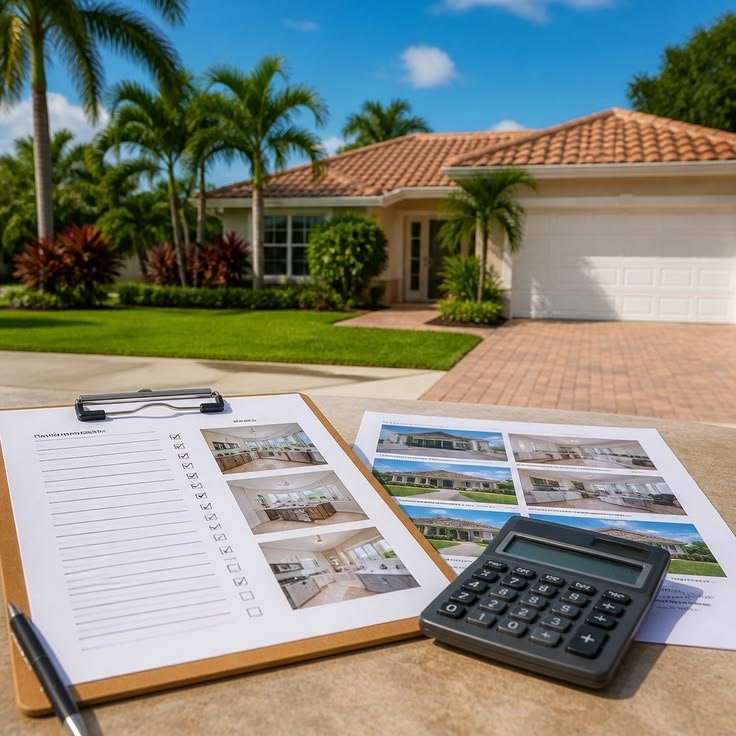
Several major platforms offer free home value estimators, and most homeowners check more than one since the numbers rarely match exactly.
Major Real Estate Portals
Sites like Zillow (Zestimate) and Redfin (Redfin Estimate) are probably the best-known tools in this category.
Both pull from public records and recent MLS activity in your area, and both let you claim your listing and manually add details such as square footage corrections, recent upgrades, or additional bedrooms, which can nudge the estimate closer to reality. Realtor.com also offers a similar tool built on comparable sales data.
Bank and Lender Tools
Many national banks and mortgage lenders offer free value-estimate calculators, often as a lead-generation tool tied to refinancing or home equity products.
These tend to lean more conservative and are usually built on a similar AVM foundation, just with different underlying data sets and weighting.
County Assessor and Public Record Sites
Your county or municipal property assessor’s website will show an “assessed value,” which isn’t a market value estimate; it’s the figure your local government uses to calculate property taxes.
Assessed values are frequently well below (or occasionally above) what a home would actually sell for, and how often they’re updated varies significantly by county and state, so this number should never be treated as a home value estimator in the way the other tools are.
How Accurate Is a Free Home Value Estimator, Really?
This is the question that matters most, and it depends heavily on your local market. In areas with a high volume of recent, similar home sales think a subdivision of nearly identical houses built in the same decade a free home value estimator can land reasonably close to what an appraiser or real buyer would offer.
In markets with fewer comparable sales, unique or older homes, rural properties, or homes with unusual features, the margin of error tends to widen considerably.
Most of these platforms publish their own median error rate, and it’s worth checking the specific tool’s disclosed accuracy for your area if you’re curious, since these figures are updated periodically and vary by location.
As a general rule of thumb, on-market listings tend to get more accurate estimates than off-market homes, since the algorithm has fresher, more relevant data.
If you’re looking for the most accurate home value estimator, the honest takeaway is that none are precise for every property; they’re all estimates, built to be directionally useful rather than exact.
Why These Tools Can Be Off by Tens of Thousands of Dollars
A handful of factors consistently trip up automated valuation models:
#1. Condition isn’t visible in the data. A home with a leaking roof, outdated electrical, or deferred maintenance will get the same baseline treatment as a well-maintained one nearby, unless a human corrects for it.
#2. Renovations and additions often lag in public records. If you’ve finished a basement or added a bathroom and haven’t pulled permits or updated the county records, the tool may not know about it.
#3. Thin comparable sales data skews results. In neighborhoods where homes rarely sell, or where recent sales are unusually high or low, the algorithm has less to work with and the margin for error grows.
#4. Unique properties confuse the model. Homes on large acreage, with unconventional layouts, or that mix commercial and residential zoning don’t fit neatly into a comparable-sales formula.
#5. Local market shifts take time to show up. If a market is cooling or heating up quickly, the estimate may still be reflecting slightly older sales data.
When to Trust an Estimate — and When to Get Something More Reliable
A free home value estimator is genuinely useful for a quick gut check: are you in the right ballpark before listing, refinancing, or just deciding whether now is a reasonable time to sell? It’s a fine starting point for casual research.
It’s a much weaker tool for anything with real money attached, such as setting a listing price, negotiating a sale, or making decisions around a divorce, estate settlement, or debt payoff.
For those situations, a comparative market analysis from a local real estate agent, or a formal appraisal from a licensed appraiser, will factor in your home’s actual condition and give you a far more defensible number.
Keep in mind that appraisal requirements, disclosure obligations, and related timelines can vary by state, so verify local rules or talk to a licensed professional in your area before making major decisions.
Get a Real Number, Not Just an Estimate
Online tools are a helpful first stop, but they can’t walk through your home or account for the timeline pressure many homeowners face: a job relocation, an inherited property, deferred repairs, or simply wanting to skip months of showings and repairs.
If you’d rather skip the guesswork and get an actual, no-obligation cash offer based on your home’s real condition, webuyhousesfastusa.com can take a look and give you a straightforward number, with no repairs, no staging, and no waiting on financing to close.
It costs nothing to find out what your house is really worth to a cash buyer, and there’s never any pressure to accept.